Your ISP Doesn't Own the Sky: How Community Mesh Networks Are Rewriting the Rules of Internet Access
Every month, roughly 70% of American households write a check — or more likely, watch an autopay drain their bank account — to one of a handful of massive telecom companies. Comcast, AT&T, Spectrum. The names change depending on your zip code, but the deal is basically the same: pay up, or go dark. For most people in most places, there's no meaningful alternative. That's not a market. That's a tollbooth.
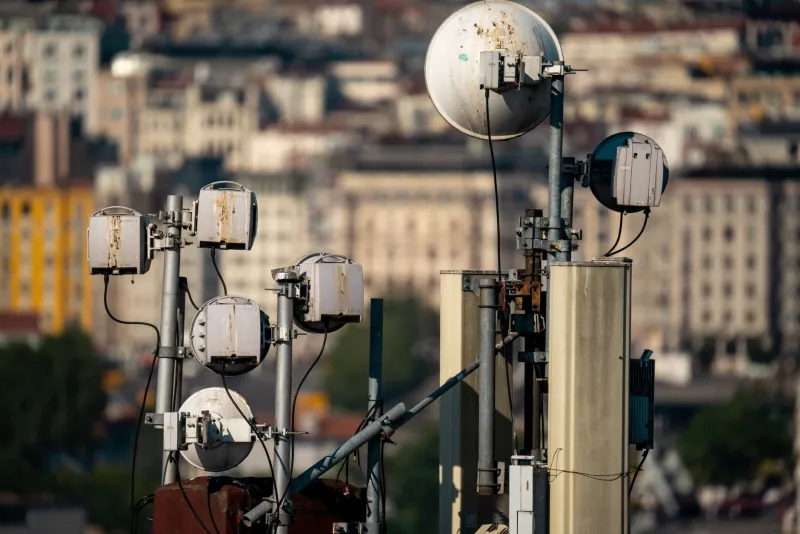
But in scattered pockets of the country, something different is happening. People are climbing onto rooftops, running cables through attics, and configuring open-source firmware on consumer-grade routers to build something the big ISPs never wanted you to have: an internet connection that belongs to the neighborhood.
What a Mesh Network Actually Is
Forget the corporate buzzword version for a second. At its core, a mesh network is just a bunch of devices that talk directly to each other instead of routing everything through a central hub. Each node — a router, a radio antenna, even a repurposed laptop — connects to nearby nodes and passes data along. If one node goes down, traffic reroutes automatically. There's no single point of failure, and crucially, no single company sitting in the middle charging rent.
In practical terms, this means a neighborhood could share a single upstream internet connection across dozens of households, or link multiple connections together for redundancy. More ambitiously, it means communities could eventually build internet infrastructure that doesn't depend on any traditional ISP at all — just a web of local nodes stretching from house to house, block to block.
That second vision is still more aspiration than reality for most American towns. But it's closer than it's ever been.
Althea: Putting a Price Tag on Every Hop
One of the more technically interesting projects in this space is Althea, a startup that's been building what it calls a "pay-per-forward" mesh network model. The basic idea is elegant: instead of paying a flat monthly rate to a single provider, you pay tiny, automatic micropayments for the actual bandwidth you use, routed through whatever combination of local nodes gets your data where it needs to go.
Each node operator — which could be you, your neighbor, a local business with a good rooftop location — earns a small amount for the traffic they carry. Payments happen automatically using cryptocurrency, which removes the friction of billing and contracts. You're not a customer of a corporation; you're a participant in a local network economy.
Althea has active deployments in rural parts of Oregon, Virginia, and a few other states, mostly targeting areas where traditional broadband is genuinely terrible or nonexistent. The pitch to underserved rural communities is straightforward: you can build something better yourselves, and you can do it for a fraction of what it would cost to wait for a cable company to show up.
Guifi and the European Blueprint
If you want to see what a mature community mesh network actually looks like, you have to look across the Atlantic. Guifi, based in Catalonia, Spain, started in the early 2000s as a scrappy project to connect rural villages that the big telecoms had written off. Today it operates more than 35,000 nodes and serves tens of thousands of users.
Guifi isn't just a technology project — it's a legal and organizational framework. Participants agree to a set of commons-based principles: you can use the network, extend the network, and benefit from the network, but you can't privatize it or block others from joining. The infrastructure is collectively owned, maintained by a mix of volunteers, small local ISPs, and municipalities.
American advocates point to Guifi constantly, and for good reason. It's proof that community-owned internet infrastructure can work at meaningful scale, survive for decades, and actually serve people well. The question is whether the conditions that made Guifi possible — denser rural populations, different regulatory environments, a particular culture of cooperative organizing in Catalonia — can translate to the American context.
The Real Barriers Aren't Technical
Here's the honest part: the technology for community mesh networks is largely solved. Affordable hardware exists. Open-source firmware like OpenWrt is mature and well-documented. Projects like NYC Mesh have demonstrated that even dense urban environments can support volunteer-run mesh infrastructure — NYC Mesh currently serves thousands of households across Brooklyn, Queens, and Manhattan, mostly as a low-cost alternative for people priced out of standard broadband.
The harder problems are social and regulatory. Convincing enough neighbors to participate — and to keep participating, through the inevitable technical headaches and organizational drama — is genuinely difficult. Getting permission to mount antennas on buildings, navigate municipal regulations, and secure rights-of-way for cables requires time, legal knowledge, and political relationships that most volunteer groups don't have.
Then there's the incumbent problem. Telecom companies have spent decades and billions of dollars lobbying for regulations that make it harder for competitors — especially nonprofit or community competitors — to operate. In some states, laws explicitly restrict municipalities from building their own broadband networks, the result of successful lobbying by companies that would rather maintain a monopoly than face local competition.
What Your Town Could Actually Do
None of that means it's hopeless. A few practical entry points exist for communities that want to start moving in this direction.
The simplest starting point is joining or supporting an existing project. NYC Mesh is the most visible American example, but similar groups operate in Chicago, Los Angeles, Detroit, and elsewhere. Most of them are actively looking for people willing to host nodes — which often means just letting someone mount a small antenna on your roof in exchange for free or reduced-cost connectivity.
For rural communities specifically, the USDA's ReConnect Program has been funding broadband infrastructure in underserved areas, and some of that funding has gone to cooperative and community-owned models rather than traditional ISPs. It's worth knowing that option exists.
For the more technically adventurous, getting involved with projects like Althea or contributing to open-source mesh firmware development puts you directly in the pipeline of people building the next generation of this infrastructure.
The Bigger Picture
Mesh networking fits naturally into the broader decentralization story that P2P Zone covers — the same instinct that drives people toward IPFS for file storage, or toward self-hosted servers, or toward crypto wallets instead of bank accounts. The through-line is a skepticism about centralized control and a belief that distributed systems, owned and operated by participants rather than corporations, tend to be more resilient and more equitable.
Internet access is arguably the most fundamental infrastructure layer of modern life. The fact that it's controlled by a small number of companies with little competitive pressure and enormous lobbying power isn't inevitable. It's a policy choice, and it's a market structure that community-owned alternatives are slowly, stubbornly chipping away at.
Your ISP doesn't own the sky above your house. Somebody just convinced you to act like they do.