Unplugging From the Cloud: How Regular Americans Are Running Their Own Servers at Home
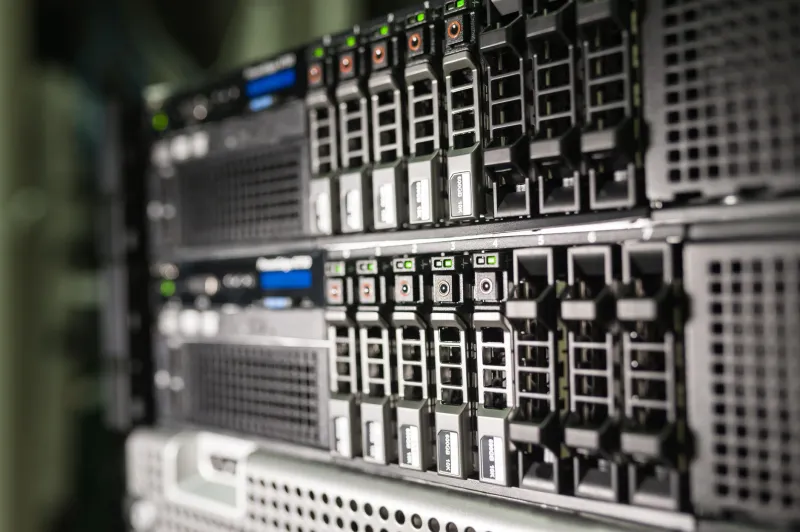
Somewhere in a suburb outside Columbus, Ohio, a middle school teacher named Derek has a Synology NAS unit humming quietly on a shelf in his home office. It holds every photo his family has ever taken, all of his school documents, and a personal media library that would make a Blockbuster manager weep with envy. He pays nothing to Google. He pays nothing to Apple. He hasn't touched iCloud in two years.
"I got tired of paying for storage I already owned," Derek told us. "And honestly, once I started reading about what these companies actually do with your data, I couldn't unsee it."
Derek isn't an anomaly anymore. Across the US, a growing wave of people — from IT professionals to curious retirees to privacy-conscious parents — are pulling their files, photos, and personal data off corporate cloud platforms and bringing them home. It's a movement that doesn't have a catchy name, but it has a clear philosophy: your data should live where you do.
Why Now? What's Pushing People Toward Self-Hosting
The timing makes sense when you look at the landscape. Cloud storage prices have crept upward. Google One plans, iCloud subscriptions, and Dropbox tiers add up fast — especially for families managing multiple accounts. At the same time, high-profile data breaches, shifting privacy policies, and growing awareness of how tech giants monetize user behavior have made a lot of Americans take a hard look at who actually controls their digital lives.
There's also the "enshittification" problem, a term that's made the rounds in tech circles to describe how platforms gradually degrade the experience for users once they're locked in. People have watched Google kill beloved products overnight. They've seen Microsoft pivot OneDrive policies without warning. After a while, trusting a corporation with your irreplaceable family photos starts to feel a little naive.
Self-hosting flips that dynamic. When your data lives on hardware you own, in your home, under your control, no quarterly earnings report can threaten it.
The Tools That Made This Actually Doable
A few years ago, running a home server meant being comfortable with Linux command lines, port forwarding, and enough networking knowledge to make most people's eyes glaze over. That barrier is coming down fast.
Nextcloud is probably the biggest reason self-hosting has gone mainstream-adjacent. It's an open-source platform that replicates most of what Google Workspace offers — file storage, photo backup, calendar, contacts, document editing — and you can run it on almost anything. A spare laptop, a Raspberry Pi, a dedicated NAS device. Nextcloud's interface is clean enough that non-technical family members can use it without a tutorial.
Synology and QNAP make purpose-built NAS (Network Attached Storage) devices that are essentially plug-and-play servers for home use. Synology's DiskStation Manager software in particular has won a lot of converts — it's polished, regularly updated, and supports apps for everything from photo management to video streaming. You buy the device, slot in some hard drives, and follow a setup wizard. It's not magic, but it's closer to magic than it used to be.
For people who want something even simpler, Umbrel has carved out a niche as a home server operating system designed specifically for non-experts. It runs on a Raspberry Pi or a mini PC, and its app store approach lets you add self-hosted alternatives to Spotify, Google Photos, and even password managers like Bitwarden — all through a friendly dashboard.
Let's Talk About the Real Costs
This is where the conversation gets honest. Self-hosting isn't free. There's upfront hardware cost, electricity, and a learning curve that varies wildly depending on your comfort level.
A solid entry-level Synology NAS runs around $200 to $300 without drives. Add two 4TB hard drives and you're looking at another $150 to $200. So call it $400 to $500 to get started. That sounds steep until you compare it to what you're currently spending.
A family paying for Google One at the 2TB tier ($9.99/month), plus an iCloud plan for a couple of devices ($2.99 to $9.99/month per person), can easily be dropping $25 to $40 a month on cloud storage across the household. That's $300 to $480 a year — and that money goes to Google and Apple forever, with nothing to show for it. Your home server, by contrast, is yours. The hardware pays for itself in a year or two, and after that you're mostly just covering electricity (a typical NAS draws somewhere between 15 and 30 watts, which is pennies a day).
That said, self-hosting does require you to think about things like backups and redundancy. The classic rule in storage circles is 3-2-1: three copies of your data, on two different media types, with one stored offsite. Plenty of self-hosters pair their home server with a cheap cloud backup service like Backblaze ($9/month for unlimited personal backup) specifically for that offsite copy. So you're not going fully off-grid — you're just taking back primary control.
Profiles in Self-Hosting: Real People, Real Reasons
Derek, the Ohio teacher, was motivated by cost and privacy. But the reasons vary.
A freelance graphic designer in Austin runs Nextcloud specifically because she was nervous about client files living on Dropbox. "I'm handling stuff that's under NDA sometimes. I don't love the idea of that sitting on someone else's infrastructure," she explained.
A retired engineer in rural Montana set up a home server partly out of principle and partly out of practicality — his internet connection is unreliable enough that having local access to his files matters. "I don't need the cloud's permission to open my own documents," he said, with the satisfaction of someone who has clearly thought about this a lot.
And a 28-year-old in Seattle running Umbrel on a mini PC got into it through cryptocurrency and ended up using it to self-host basically his entire digital life. "Once you start going down that rabbit hole, you realize how much you've outsourced," he said.
Is It For Everyone? Probably Not. Is It For More People Than You'd Think? Definitely.
Let's be real — self-hosting isn't a drop-in replacement for iCloud for your technophobic relatives. There's setup involved, occasional troubleshooting, and the responsibility of managing your own data. If something goes wrong, there's no customer support line to call.
But the gap between "requires a computer science degree" and "regular person can handle this" has closed dramatically. If you've ever set up a router, installed software, or followed a YouTube tutorial through a home improvement project, you probably have what it takes to get a basic self-hosted setup running.
The self-hosting community is also genuinely one of the friendlier corners of the internet. Forums like r/selfhosted on Reddit are packed with people who love walking newcomers through setup questions. Documentation for tools like Nextcloud has improved massively. There are entire YouTube channels dedicated to walking people through home server builds step by step.
The Bigger Picture
Self-hosting is, at its core, a distributed systems story. Instead of everyone's data flowing into a handful of massive corporate data centers, it lives across thousands of individual nodes — homes, apartments, garages. That's a fundamentally different architecture, and one that aligns pretty naturally with the peer-to-peer ethos that's always driven the best parts of the internet.
It won't replace cloud services for everyone. But for the Americans who are fed up with renting access to their own lives, the tools to take back control have never been more accessible. Derek in Columbus is just one example. There are a lot more Dereks out there than the cloud companies would like to admit.