Your Smart Home Has a Landlord, and It's Not You
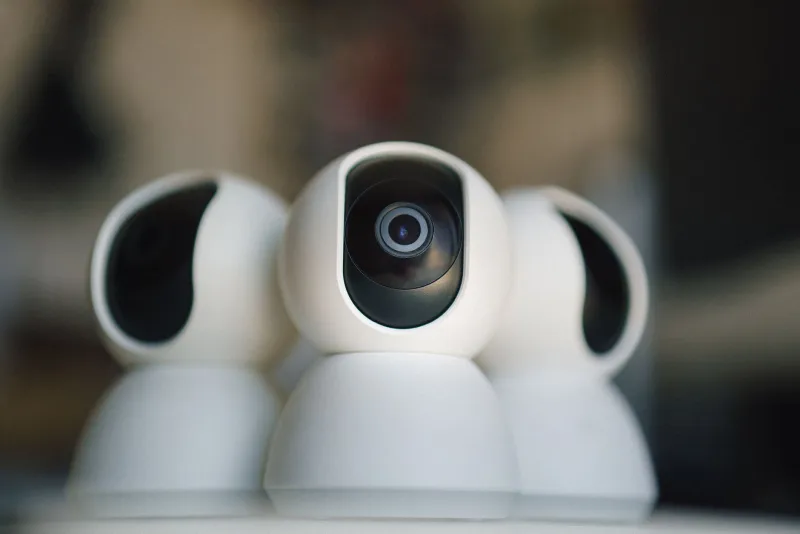
You bought the smart bulbs. You set up the video doorbell. You told the little speaker on your kitchen counter what music you wanted while you made coffee this morning. Feels pretty futuristic, right? Here's the part the product box doesn't mention: almost everything your smart home does gets routed through servers you don't own, logged by companies whose business model depends on knowing as much about you as possible.
This isn't a conspiracy theory. It's just how the current smart home industry is architected — and once you understand the plumbing, it's hard to unsee.
How Your Devices Actually Talk to Each Other
Most mainstream smart home ecosystems — think Amazon Alexa, Google Home, or Apple HomeKit — operate on what's called a cloud-dependent model. When you tap your phone to dim the lights in your living room, that command doesn't go straight from your phone to the bulb sitting ten feet away. It leaves your house, travels to a data center, gets processed, and then a signal comes back telling your bulb what to do.
Let that sink in for a second. You're asking a computer in another state for permission to change the lighting in your own home.
Beyond the absurdity of the latency involved, there's a bigger issue: every one of those round trips is a data point. Your wake-up time. When you leave the house. How often you're in the kitchen versus the bedroom. Whether someone's home on a Tuesday afternoon. Individually, these seem trivial. Aggregated over months and years, they build a behavioral profile that's genuinely valuable — not to you, but to the platforms collecting it.
And then there's the reliability problem. When Amazon AWS goes down, people lose access to their own light switches. That happened. Multiple times. That's not a smart home. That's a home with a dependency problem.
The Mesh Alternative Nobody's Marketing to You
Here's where things get interesting for anyone who follows decentralized tech. A growing community of developers and privacy-conscious homeowners are building smart home setups that work the way the internet was originally supposed to: devices talking directly to each other, locally, without phoning home to a corporate middleman.
Mesh networking is the backbone of this approach. Instead of a hub-and-spoke model where everything routes through the cloud, mesh networks let devices form their own communication web. Each node can relay information to the others, and the whole system keeps functioning even if one piece drops out — or if your internet connection goes down entirely.
The protocol getting the most traction in DIY and open-source circles right now is Matter, backed by the Connectivity Standards Alliance. Matter is designed to let devices from different manufacturers communicate locally over your home network without needing vendor-specific cloud services. It's not fully peer-to-peer in the blockchain sense, but it's a meaningful step toward local-first architecture.
Then there's Home Assistant, the open-source home automation platform that's become something of a cult favorite among technically inclined homeowners across the US. You run it on a local server — often a cheap Raspberry Pi or a repurposed mini PC — and it acts as the brain of your smart home without sending your data anywhere. Integrations exist for thousands of devices, and the community is enormous. It's the kind of project that makes you realize how much unnecessary cloud infrastructure the commercial products are running just to maintain platform lock-in.
Zigbee and Z-Wave are two other protocols worth knowing. Both allow devices to form mesh networks and communicate directly over radio frequencies, independent of your Wi-Fi and completely independent of any cloud service. A Zigbee-enabled motion sensor doesn't need to check in with a server in Oregon to tell your lights to turn on when you walk into the room. It just does it, locally, in milliseconds.
What's Actually Stopping This From Going Mainstream
So if local, peer-to-peer smart home setups are more private, more reliable, and arguably more capable — why isn't everyone doing it?
A few honest reasons.
Setup complexity is real. Installing Home Assistant is not the same experience as plugging in an Echo and saying "Alexa, discover devices." You're looking at reading documentation, troubleshooting YAML config files, and occasionally spending a Saturday afternoon figuring out why one particular smart plug isn't showing up. The people who've done it will tell you it's worth it. But the average person who just wants their porch light to turn on at sunset isn't signing up for that learning curve.
Device compatibility is fragmented. Matter is helping, but the smart home device market is still a mess of proprietary ecosystems. Some of the most popular consumer devices — Ring cameras, Nest thermostats — are deeply integrated with their parent platforms and don't play nicely with local-only setups. You'd sometimes have to replace working hardware to go fully decentralized, and that's a real cost.
Convenience is a powerful drug. "Hey Google, turn off everything" is a genuinely great user experience. The commercial platforms have invested billions in making their products feel seamless. Open-source alternatives have to compete with that, and right now, they mostly win on principles rather than polish.
That said, the trajectory is encouraging. Matter adoption is accelerating. Home Assistant's user base has grown dramatically over the past two years. And as more Americans get serious about digital privacy — especially after high-profile stories about Ring footage being handed to law enforcement without warrants — the appetite for alternatives is growing.
What You Can Actually Do Right Now
You don't have to overhaul your entire setup overnight. A few practical starting points:
- Check out Home Assistant at home-assistant.io. Even just browsing what it can do is eye-opening compared to what the commercial platforms allow.
- Look for Matter-certified devices when you're buying new smart home hardware. They're not all created equal, but the certification at least signals local control capability.
- Consider Zigbee or Z-Wave for sensors and switches if you're building from scratch. The upfront research pays off in a system that works even when your ISP is having a bad day.
- Audit your existing setup. Go into the privacy settings of whatever smart home app you're using and see what data collection you can actually opt out of. You might be surprised — or you might not be.
The smart home dream was always supposed to be about making your life easier and your home work better for you. Somewhere along the way, it turned into a data collection apparatus dressed up in sleek industrial design. The tools to take that back already exist. They're just waiting for more people to pick them up.