What If the Factory Was Your Neighbor's Garage? The Rise of P2P Manufacturing
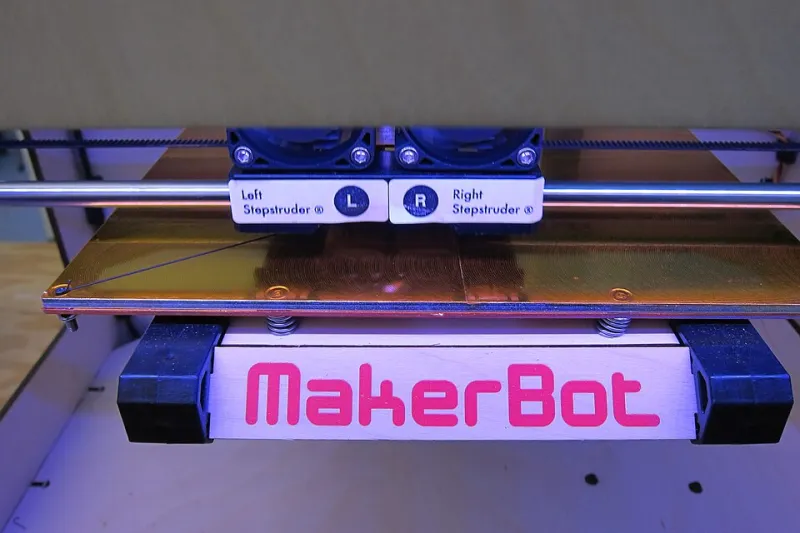
Photo: jabella, CC BY 2.0, via Wikimedia Commons
The pandemic broke something in the global supply chain that hasn't fully healed. Americans watched surgical masks sell out in hours, car lots sit empty for months because of chip shortages, and baby formula disappear from shelves. The fragility of a system built around centralized production, ocean shipping, and just-in-time inventory became impossible to ignore.
Some people responded by stocking up. Others responded by building something different.
The Distributed Manufacturing Idea
At its core, peer-to-peer manufacturing is pretty simple: instead of one big factory making ten million units of something and shipping them across the world, you have thousands of small producers — equipped with 3D printers, CNC machines, laser cutters, or traditional craft skills — making smaller quantities closer to where things are actually needed.
What makes this more than just a craft fair or an Etsy shop is the coordination layer. Blockchain technology is enabling platforms where designers can publish open-source blueprints, local makers can bid to produce them, and consumers can order directly — with smart contracts handling payments, quality verification, and reputation tracking automatically.
The result, in theory, is a supply chain that's resilient by design. There's no single point of failure, no container ship that can get stuck in the Suez Canal and take half the world's consumer goods with it.
Who's Actually Building This
Several projects are pushing this model forward in different ways.
Fab City Network isn't a blockchain project per se, but it's one of the most ambitious attempts to rethink where things get made. The initiative — which has signed up cities across the US and globally — is built around a goal of making cities self-sufficient in production by 2054. Local fabrication hubs, open-source design libraries, and shared equipment are the building blocks. Detroit, with its manufacturing heritage and maker culture, has been an interesting test case for these ideas.
Protocol Labs and IPFS have provided infrastructure that distributed manufacturing platforms are beginning to use for storing and sharing design files. When a product blueprint lives on IPFS rather than a company's private server, it can't be taken down, paywalled, or lost if the startup folds. That's a big deal for open-source hardware communities that have watched years of collaborative work disappear when a hosting company shut down.
Valist and similar Web3 developer platforms are exploring how smart contracts can govern the licensing and monetization of digital designs — so that a product designer in Portland can publish a blueprint, have it manufactured by makers in Cleveland and Austin, and automatically receive a royalty every time a unit is produced, without needing a middleman to track any of it.
And then there's the grassroots layer. Communities like r/functionalprint on Reddit and the broader RepRap community have been sharing open-source 3D printing designs for years. What's new is the economic infrastructure being built around these communities — tokenized incentives, on-chain reputation, and decentralized marketplaces that let makers actually earn a living.
The 3D Printing Piece
You can't talk about P2P manufacturing without talking about 3D printing. Consumer-grade printers have gotten dramatically cheaper and more capable over the past decade. A decent FDM printer runs a few hundred bucks now, and the quality of prints has improved to the point where functional parts — brackets, enclosures, replacement components — are genuinely useful rather than just novelties.
During the pandemic, this played out in real time. When N95 masks were unavailable, maker communities organized within days to produce 3D-printed face shield frames. When ventilator components were in short supply, engineers published open-source designs and local shops printed them. It was chaotic and imperfect, but it demonstrated something important: distributed production can respond to local demand faster than centralized supply chains.
The challenge is scaling that kind of coordination beyond crisis response and into everyday commerce. That's where the blockchain coordination layer becomes interesting — not as a gimmick, but as a genuine tool for managing trust and transactions between strangers who've never met.
What Small Businesses and Indie Designers Are Getting Out of This
For a product designer or small hardware startup, traditional manufacturing is brutal. Minimum order quantities from overseas factories can run into the thousands of units, requiring capital that most indie creators don't have. Lead times are long, quality control is difficult to manage remotely, and if your design needs to change — because customers gave you feedback, or a component became unavailable — you're often stuck with a warehouse full of obsolete inventory.
P2P manufacturing flips those economics. Platforms like Maker's Row (which connects US brands with American manufacturers) and emerging blockchain-native alternatives let designers prototype and iterate quickly, order small batches, and scale production gradually as demand proves out. You're not betting your savings on a container of product that might not sell.
For makers on the production side, it's a way to monetize equipment that would otherwise sit idle. If you've got a printer running 24 hours a day producing parts for local customers — coordinated through a platform that handles discovery, payment, and reputation — that's a real income stream, not just a hobby.
The Hard Parts
None of this is frictionless. A few real challenges stand out.
Quality consistency is genuinely difficult across a distributed network of producers with different equipment, materials, and skill levels. Centralized manufacturing has its problems, but tight quality control is something it actually does well. P2P platforms are experimenting with reputation systems, sample verification, and community review — but it's still a work in progress.
Intellectual property is complicated. Open-source licensing frameworks like Creative Commons work reasonably well for software and creative works, but physical products involve a messier tangle of patent law, liability, and safety regulations. A maker printing a replacement part for your coffee maker in their garage occupies a legal gray area that nobody has fully sorted out.
And blockchain coordination, while promising, adds technical complexity that most small business owners and casual makers aren't equipped to navigate yet. The UX needs to get a lot better before this goes truly mainstream.
Why It Matters Beyond the Hype
The appeal of P2P manufacturing isn't just about cutting out middlemen or making cool stuff locally — though both of those things are real. It's about building economic resilience into communities that have watched manufacturing disappear over the past few decades.
When the design files are open, the equipment is distributed, and the coordination is handled by a transparent protocol rather than a corporate platform, the value created stays closer to where it's generated. That's a different vision of how an economy can work — and given what the last few years have shown us about the brittleness of centralized supply chains, it's a vision worth taking seriously.